
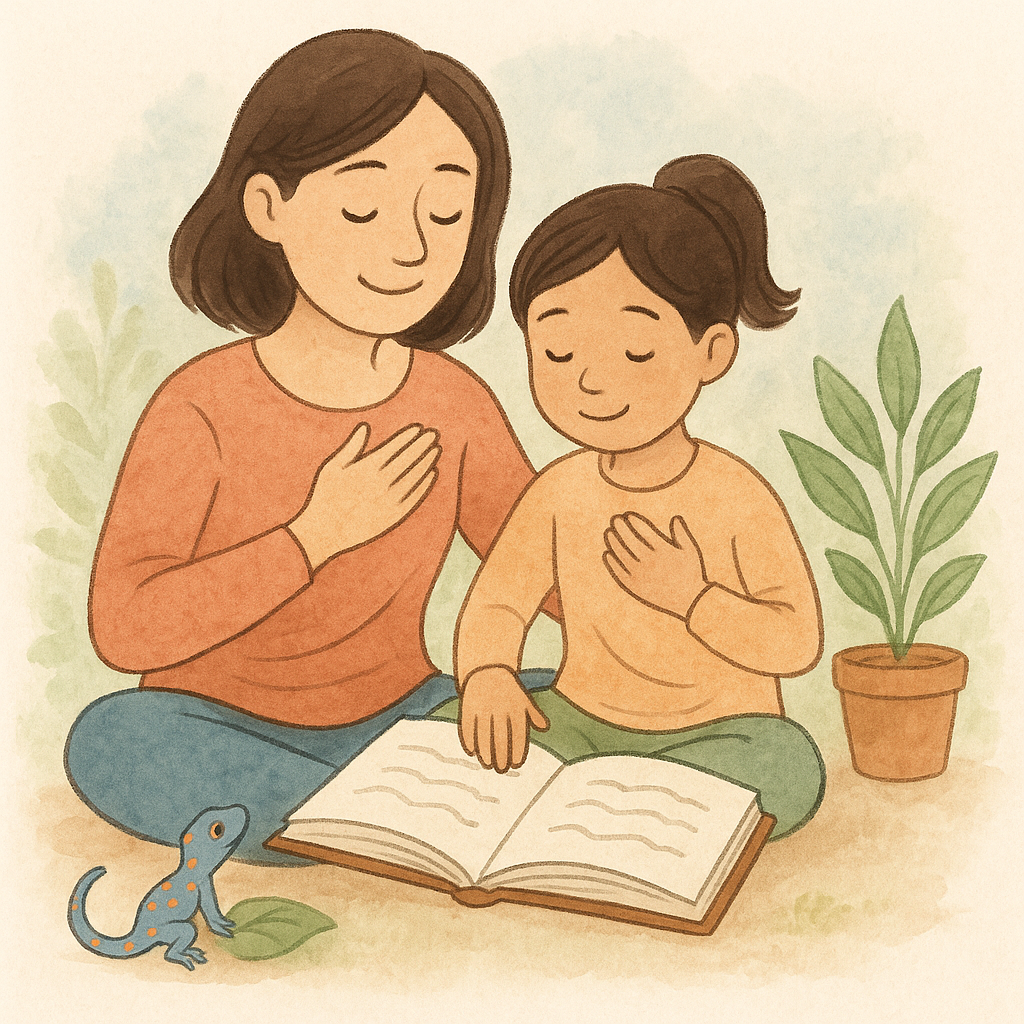
Building literacy is about so much more than learning to read words on a page. For young children, confidence is the foundation that supports every reading skill they develop. When children feel calm, capable, and encouraged, reading becomes something they enjoy—not something they fear.
Whether you’re a parent reading at home or a teacher supporting a classroom, these simple literacy strategies are designed to nurture confident, happy readers between the ages of 4 and 10.
Strategy 1: Create Consistent Read-Aloud Routines
Reading aloud to children—no matter their age—is one of the most powerful ways to build literacy confidence.
A consistent read-aloud routine helps children:
- hear fluent reading
- develop vocabulary naturally
- associate reading with warmth and connection
Choose a regular time each day, even if it’s just 10 minutes. Let children relax and listen without pressure to read along. Over time, they begin to internalize language patterns and storytelling structure, which strengthens their own reading skills.
Strategy 2: Take a “Picture Walk” Before Reading
Before reading a new book, take a few minutes to explore the pictures together.
This simple step helps children:
- predict what the story might be about
- activate prior knowledge
- feel prepared before encountering text
Ask gentle questions like:
- “What do you think is happening here?”
- “How do you think the character feels?”
Picture walks reduce anxiety and give children a sense of control before they begin reading.
Strategy 3: Encourage Repetition—Without Pressure
Children often ask to read the same book again and again. This isn’t a sign of boredom—it’s a powerful learning strategy.
Repetition allows children to:
- recognize familiar words
- build fluency naturally
- gain confidence through mastery
Instead of pushing new books too quickly, honor their desire for repetition. Confidence grows when children realize, “I know this story.”
Strategy 4: Use Movement and Breath While Reading
Literacy doesn’t have to be a still, silent activity.
Incorporating gentle movement or breath can help children:
- regulate their bodies
- focus their attention
- stay engaged longer
Try simple practices such as:
- taking three slow breaths before reading
- stretching arms or shoulders between pages
- allowing children to change positions while listening or reading
A calm body supports a focused mind, which directly impacts reading confidence.
Strategy 5: Let Children Retell Stories in Their Own Words
After reading, invite children to retell the story—without correcting them.
Retelling helps children:
- understand story structure
- strengthen comprehension
- express ideas confidently
They can retell through:
- words
- drawings
- acting out the story
There is no “right” way to retell. The goal is expression, not perfection.
A Gentle Reminder for Parents and Educators
Every child’s literacy journey is unique. Confidence grows when children feel supported, not rushed. By creating calm reading environments, honoring curiosity, and celebrating small wins, we help children see themselves as capable readers—one page at a time.
